Planning, design and infrastructure.
Oral solid dosage (OSD) medicines are among the most widely used pharmaceutical products in the world. Tablets, capsules, sachets and powders account for a significant proportion of medicines prescribed globally because they are convenient to manufacture, transport, store and administer.
Demand for pharmaceutical manufacturing continues to grow, driven by expanding healthcare access, generic drug production and increasing local manufacturing initiatives. Consequently, many companies are investing in new OSD manufacturing facilities. However, building a pharmaceutical plant capable of producing high-quality oral solid dosage products involves much more than installing tablet presses and packaging lines.
Every decision, from facility layout and process flow to utility design and regulatory compliance, affects product quality, operational efficiency and long-term profitability.
Part one of our guide explores the planning and infrastructure considerations involved in setting up an OSD manufacturing facility, while part two will examine the oral solid dosage manufacturing process, equipment selection, quality systems and future-ready manufacturing.
Understanding oral solid dosage manufacturing.
Before planning a facility, it’s important to understand what oral solid dosage manufacturing actually involves.
Unlike API manufacturing, where active pharmaceutical ingredients are synthesised or produced through biotechnology, OSD facilities convert APIs into finished medicines that patients consume.
There are many OSDs, with common oral solid dosage products being:
- Tablets
- Hard gelatin capsules
- Softgel capsules
- Effervescent tablets
- Chewable tablets
- Orally disintegrating tablets (ODTs)
- Powders
- Granules
Although these products differ in formulation and manufacturing methods, they generally follow the same high-level production philosophy: accurately combine APIs with pharmaceutical excipients to produce safe, effective and consistent medicines.
Since patients consume these medicines directly, every stage of production must comply with strict Good Manufacturing Practice (GMP) requirements.
Defining the purpose of the facility.
Every successful pharmaceutical project begins by clearly defining the facility’s intended purpose.
Defining the purpose of your facility involves asking certain key questions like:
- Will the facility manufacture tablets, capsules or both?
- Will production focus on generic medicines, branded pharmaceuticals or contract manufacturing?
- What production capacity is required?
- Will the facility support high-volume commercial production or smaller specialty batches?
- Are highly potent products involved?
- Will multiple products be manufactured simultaneously?
The answers determine almost every engineering decision throughout the project. For example, a contract development and manufacturing organisation (CDMO) typically requires greater flexibility than a facility dedicated to a handful of established products. Similarly, facilities handling highly potent compounds require enhanced containment systems that significantly influence building design.
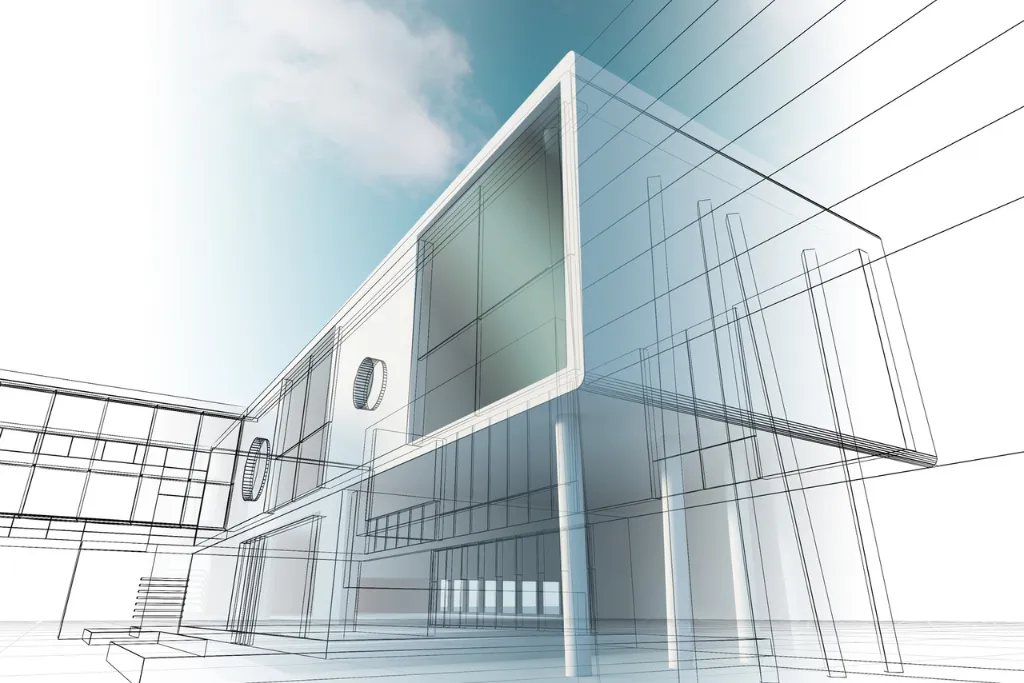
Facility planning starts with process flow.
One of the biggest mistakes in pharmaceutical construction is designing the building before understanding the manufacturing process. Instead, the process should dictate the facility layout.
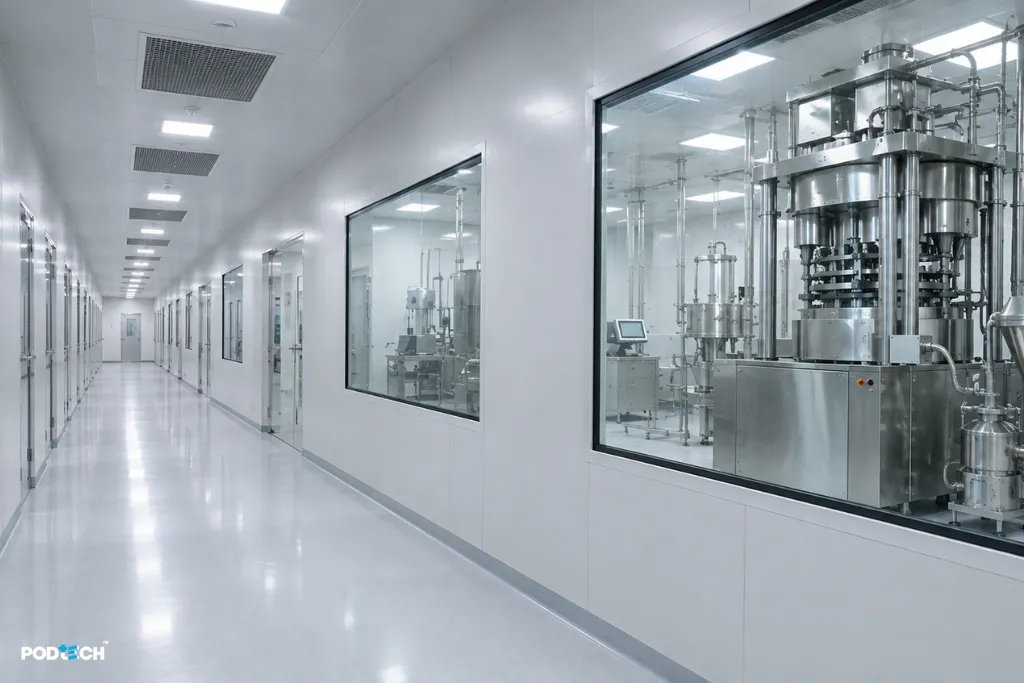
An efficient OSD facility allows materials, personnel and waste to move through the building without unnecessary crossover or contamination risks. A typical facility comprises dedicated areas for:
- Raw material receipt
- Sampling
- Quarantine storage
- Dispensing
- Granulation
- Drying
- Milling
- Blending
- Compression
- Encapsulation
- Coating
- Inspection
- Primary packaging
- Secondary packaging
- Finished goods warehouse
- Quality control laboratories
- Stability chambers
The logical sequencing of these operations improves production efficiency while simplifying GMP compliance.
Designing for GMP compliance.
Regulatory compliance begins long before production starts. Global pharmaceutical regulators including the US FDA, EMA, WHO GMP, PIC/S and national authorities expect facilities to be designed with contamination prevention in mind. This involves keeping some key design principles in mind.
Controlled material flow. Raw materials should move progressively through production without crossing finished products.
Personnel segregation. Operators should have dedicated changing rooms and clearly defined movement pathways to minimise contamination.
Air pressure cascades. Manufacturing areas often use pressure differentials to prevent airborne particles from migrating between rooms.
Appropriate room classifications. Different manufacturing steps require varying levels of environmental control depending on product sensitivity.
When these principles are incorporated during design, regulatory inspections become considerably smoother.
HVAC: one of the most critical systems in your OSD facility.
In pharmaceutical manufacturing, HVAC is much more than an air-conditioning system.
It regulates many environmental conditions like:
- Temperature
- Relative humidity
- Air cleanliness
- Pressure differentials
- Air change rates
- Particle control
For tablet and capsule manufacturing, humidity control is particularly important. Excess moisture can affect powder flow, granulation, tablet hardness, dissolution characteristics and product stability. Conversely, air that is too dry may generate excessive static electricity, causing powder handling challenges. Proper HVAC design therefore plays a direct role in product quality.
Utilities that keep production running.
Behind every efficient OSD manufacturing facility lies a sophisticated utility infrastructure. Common utility systems include:
- Purified water
- Water for injection
- Compressed air
- Chilled water
- Steam
- Process vacuum
- Nitrogen supply
- Electrical systems
- Backup power generation
These systems support both production equipment and environmental controls. Although utilities remain largely invisible during daily operations, failures can quickly halt manufacturing or compromise product quality. Reliability and redundancy are therefore essential design considerations.
Material handling and warehousing.
An OSD facility processes numerous raw materials, including APIs, fillers, binders, lubricants, coatings, disintegrants and packaging components. Efficient warehousing has separate areas for:
- Incoming materials
- Quarantine stock
- Released inventory
- Rejected materials
- Returned products
- Packaging components
- Finished goods
Environmental conditions must also be controlled according to each material’s storage requirements. Digital inventory systems increasingly help manufacturers improve traceability while reducing manual errors.
Contamination control.
Cross-contamination remains one of the greatest risks in pharmaceutical manufacturing.
If you run an OSD facility, you must have certain preventative measures in place:
- Closed material transfer systems
- Dust extraction
- Airlocks
- Pass boxes
- Dedicated equipment where necessary
- Cleaning validation
- Segregated production suites
Facilities manufacturing allergenic or highly potent products may require completely isolated production areas. Effective contamination control not only protects patients but also improves operational efficiency by reducing cleaning downtime.
Automation and digital infrastructure.
Modern pharmaceutical plants are becoming increasingly digital. Automation systems monitor production parameters while improving consistency and reducing operator intervention. Digital infrastructure may comprise any or all of the following systems:
- Manufacturing Execution Systems (MES)
- SCADA systems
- Electronic Batch Records (EBR)
- Laboratory Information Management Systems (LIMS)
- Environmental monitoring
- Building Management Systems (BMS)
Together, these technologies improve data integrity, simplify compliance and provide greater operational visibility.
Sustainability as a design requirement.
Environmental performance has become an increasingly important consideration in pharmaceutical facility design. Manufacturers now seek to reduce energy consumption, water usage, waste generation and carbon emissions
Sustainable design strategies may include energy-efficient HVAC systems, heat recovery, LED lighting, variable-speed drives, water recycling, solar integration and/or efficient compressed air systems. Besides reducing environmental impact, these measures often lower operating costs throughout the facility’s lifecycle.
Planning for expansion.
The pharmaceutical market changes rapidly. New products are introduced. Demand fluctuates. Regulations evolve.
Rather than building facilities that meet only today’s production requirements, companies increasingly design for future growth. Expansion-ready design features include additional production space, oversized utility capacity, modular manufacturing suites, flexible equipment layouts and expandable warehouse facilities.
These features make future capacity increases significantly easier and more cost-effective.
Why early planning determines project success.
Every decision made during the planning phase influences the facility’s long-term performance. Well-planned OSD manufacturing facilities typically benefit from:
- Faster regulatory approval
- Improved production efficiency
- Lower operating costs
- Easier maintenance
- Better contamination control
- Greater manufacturing flexibility
- Simpler future expansion
In pharmaceutical manufacturing, thoughtful engineering almost always proves less expensive than correcting design mistakes after construction.
In part two, we’ll explore the oral solid dosage manufacturing process, the equipment required for each production stage, validation, quality systems and how modern technologies are shaping the future of pharmaceutical manufacturing.
The oral solid dosage manufacturing process: equipment, validation and building a future-ready OSD facility.
Once an OSD manufacturing facility has been designed and constructed, its success depends on the efficiency and consistency of its manufacturing operations.
The oral solid dosage manufacturing process transforms active pharmaceutical ingredients into finished medicines through a carefully controlled sequence of processing steps. Every stage must ensure product quality while maintaining regulatory compliance, operational efficiency and patient safety.
Pharmaceutical production requires every batch to meet the same quality standards regardless of production volume. Achieving this consistency depends on robust process design, validated equipment, skilled personnel and comprehensive quality systems.
In this part of our blog post, we examine the solid oral dosage form manufacturing process, the equipment used throughout production and the operational practices that help manufacturers maintain world-class pharmaceutical facilities.
Step 1: raw material dispensing.
Production begins with accurately dispensing raw materials. Each batch requires precise quantities of
- Active Pharmaceutical Ingredients (APIs)
- Fillers
- Binders
- Disintegrants
- Lubricants
- Glidants
- Coating materials
Dispensing typically occurs inside controlled environments equipped with dust extraction systems to minimise contamination while protecting operators. Modern facilities increasingly employ barcode verification and electronic weighing systems to reduce human error.
Step 2: granulation.
Many tablet formulations cannot be compressed directly. Instead, powders undergo granulation to improve flow characteristics and compressibility. The most common granulation methods include:
Wet granulation. A binder solution joins powder particles together before drying.
Dry granulation. Powders are compacted without liquid, making this method suitable for moisture-sensitive products.
Direct compression. Some formulations bypass granulation altogether when powder properties allow direct tablet compression.
The chosen method depends on formulation characteristics, product stability and manufacturing efficiency.
Step 3: drying and milling.
Following wet granulation, excess moisture must be removed. Fluid bed dryers are commonly used because they provide efficient, uniform drying while preserving granule quality. Once dried, granules are milled to produce a consistent particle size distribution.
Uniform particle size contributes to consistent tablet weight, uniform drug content, reliable dissolution and improved compression performance.
Step 4: blending.
Before compression, granules are blended with lubricants and other final excipients. Uniform mixing is critical because insufficient blending may produce tablets containing uneven API concentrations, while excessive blending can negatively affect tablet hardness and dissolution characteristics.
Equipment commonly used in this stage includes:
- Bin blenders
- Double-cone blenders
- V-blenders
- Intermediate bulk containers (IBCs)
Blend uniformity testing verifies that the mixture meets predefined quality specifications before production continues.
Step 5: compression or encapsulation.
This stage converts the blended formulation into its final dosage form.
Tablet compression. Tablet presses compress powder into tablets using precisely engineered punches and dies. Modern tablet presses continuously monitor compression force, tablet weight, thickness, hardness and production speed. Automatic rejection systems remove tablets that fall outside specified limits.
Capsule filling. Capsule filling machines accurately dispense powder or pellets into hard gelatin or HPMC (hydroxypropyl methylcellulose) capsules. These systems must maintain consistent fill weight while preventing capsule damage.
Step 6: tablet coating.
Many tablets receive protective or functional coatings. Coatings may improve product stability, taste masking, swallowability, appearance and/or modified drug release. Perforated coating pans equipped with sophisticated spray systems provide uniform coating while carefully controlling drying conditions.
Step 7: inspection and packaging.
Finished tablets and capsules undergo inspection before packaging. Automated inspection systems identify defects such as:
- Broken tablets
- Colour variation
- Surface imperfections
- Incorrect fill levels
- Foreign particles
Products are then packaged into blister packs, bottles, sachets or strip packs. Secondary packaging includes cartons, patient information leaflets, aggregation and serialisation where required.
Quality systems support every stage.
Quality assurance extends far beyond laboratory testing. Throughout the solid oral dosage form manufacturing process, manufacturers implement comprehensive systems covering:
- Standard Operating Procedures (SOPs)
- Batch documentation
- Equipment calibration
- Environmental monitoring
- Supplier qualification
- Change control
- Deviation management
- Corrective and Preventive Actions (CAPA)
- Internal audits
These systems ensure compliance while supporting continuous improvement.
Validation ensures consistency.
Validation demonstrates that production systems consistently deliver medicines meeting predetermined quality standards. Validation activities include:
- Equipment qualification.
- Installation Qualification (IQ)
- Operational Qualification (OQ)
- Performance Qualification (PQ)
Process validation. Manufacturing multiple commercial-scale batches verifies consistent product quality.
Cleaning validation. Cleaning procedures must effectively remove residues between product changeovers.
Computer system validation. Digital systems controlling production and documentation must also be validated to ensure data integrity.
Together, these validation activities form the backbone of GMP compliance.
Workforce and training.
Highly automated facilities still rely heavily on skilled personnel. Typical OSD manufacturing teams include:
- Production operators
- Pharmacists
- Process engineers
- Validation specialists
- Quality assurance professionals
- Quality control analysts
- Maintenance engineers
- Automation engineers
- Warehouse personnel
- Regulatory affairs specialists
Continuous GMP training ensures employees remain current with evolving regulatory expectations and internal quality procedures.
Building flexible OSD facilities.
The pharmaceutical market increasingly demands flexibility. Manufacturers often produce numerous products across shared production lines while maintaining rapid changeovers. Modern OSD facilities therefore incorporate:
- Multipurpose manufacturing suites
- Flexible equipment
- Modular utility systems
- Expandable packaging lines
- Digital production management
- Scalable warehouse infrastructure
These design strategies allow facilities to respond quickly to changing market demands while minimising future capital expenditure.
Turnkey modular construction accelerates project delivery.
Pharmaceutical projects frequently operate under aggressive timelines. Turnkey solutions and modular construction offer a practical solution by manufacturing cleanrooms, utility skids, mechanical modules and process systems off-site while civil construction progresses in parallel.
Benefits include shorter project schedules, improved quality control, reduced on-site labour, faster commissioning and lower construction risk.
Hybrid approaches that combine conventional structural construction with prefabricated pharmaceutical process modules are becoming increasingly popular for new OSD manufacturing facilities.
Building for the next generation of pharmaceutical manufacturing.
The future of oral solid dosage manufacturing extends beyond simply increasing production capacity. Manufacturers are investing in digital technologies, automation, sustainability and flexible facility design to remain competitive in a rapidly evolving pharmaceutical landscape.
A successful OSD manufacturing facility integrates efficient infrastructure, robust quality systems, advanced manufacturing equipment and scalable engineering from the outset. By understanding the oral solid dosage manufacturing process and designing facilities around both current and future production needs, pharmaceutical companies can improve operational efficiency while maintaining the highest standards of product quality and regulatory compliance.
Whether producing high-volume generic medicines or specialised pharmaceutical products, the most successful facilities are those designed with adaptability, efficiency and long-term performance at their core. As demand for oral solid dosage medicines continues to grow worldwide, thoughtfully engineered OSD facilities will remain essential to delivering safe, effective medicines to patients across the globe.